A Series of Streets…
Budapest was wearing its winter face that day—cold air, low clouds, the kind of gray that softens the edges of everything. I was cutting through the city on my way to meet a friend visiting from Vienna, moving with that familiar travel-focus: one eye on the map, the other scanning for light.
And then I saw it.
Karolyi Tunnel: A Window Underground
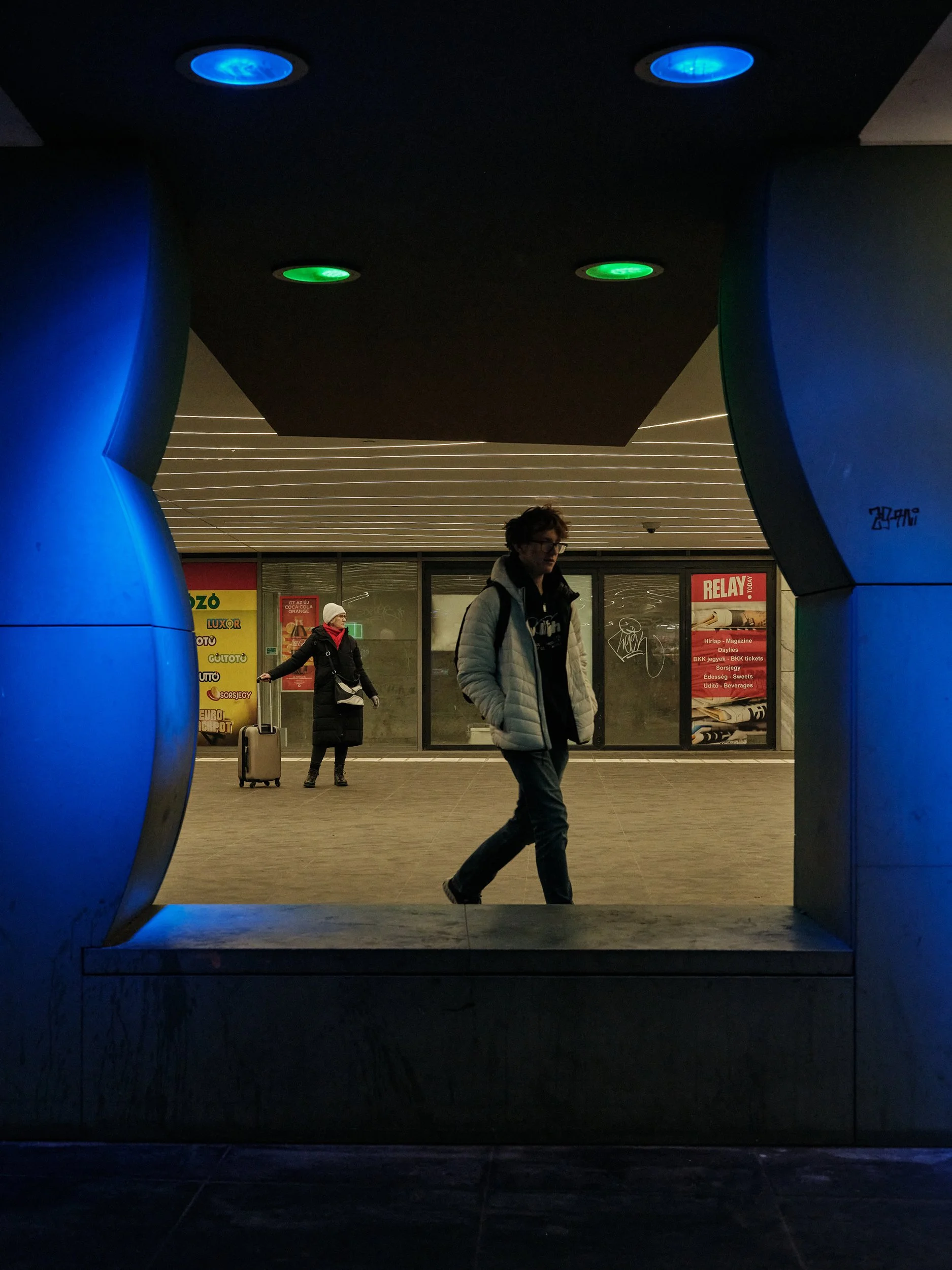
Not a landmark, not a postcard view—something better. A dark navy-blue sculpted frame, smooth and bold, like a piece of modern art dropped underground and left there for the city to use. It didn’t feel like architecture trying to impress you. It felt like architecture watching you.
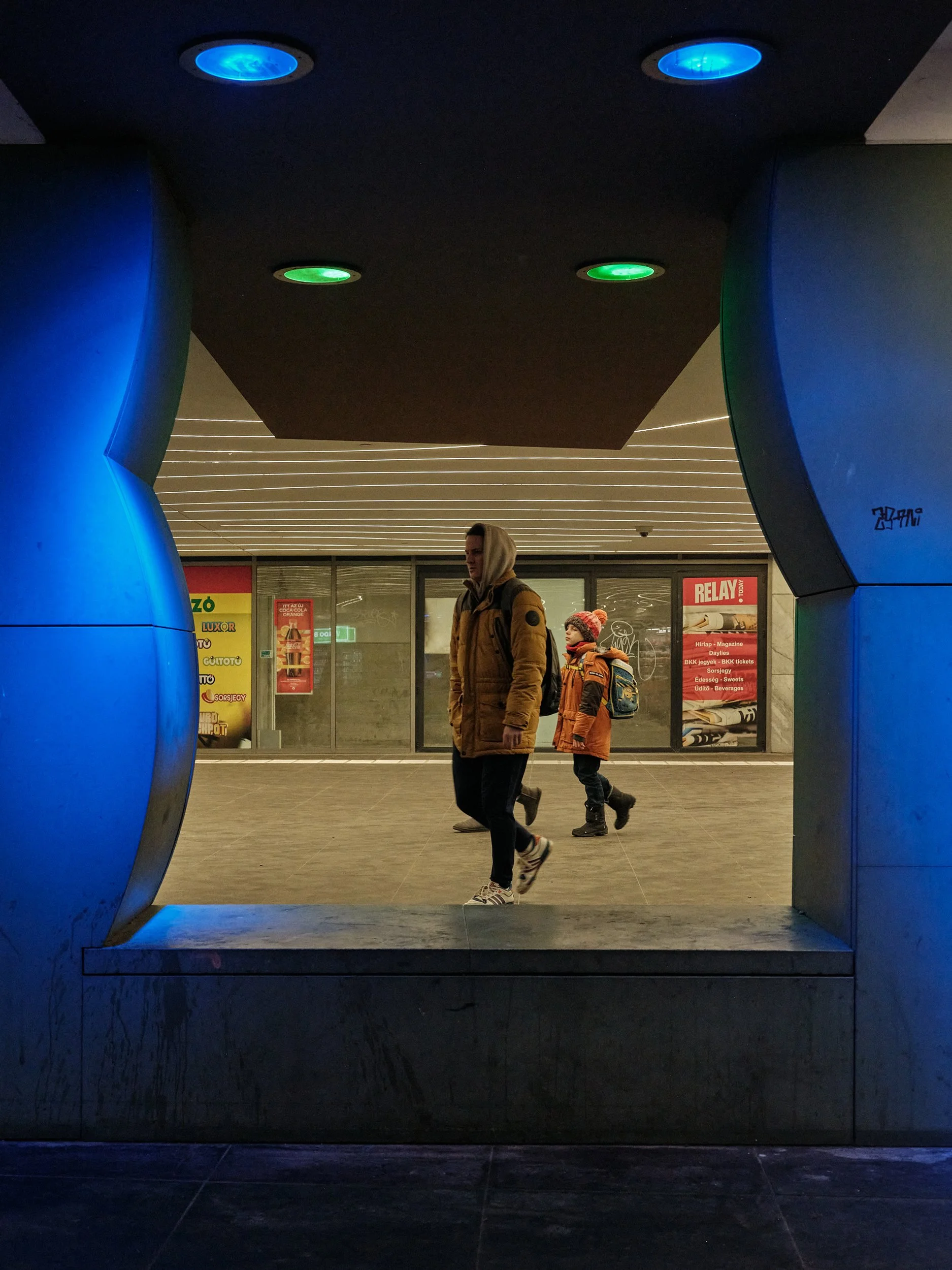
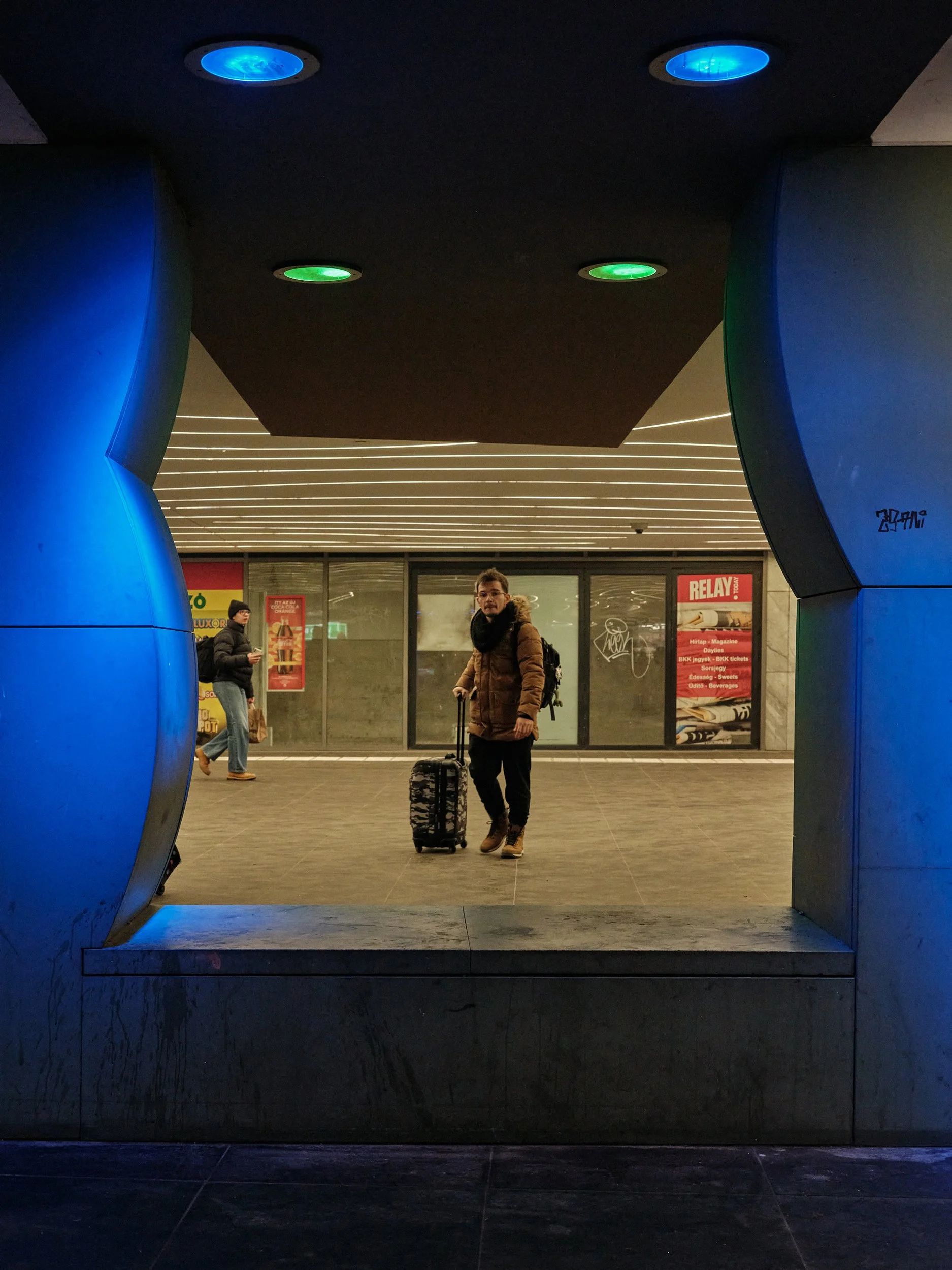
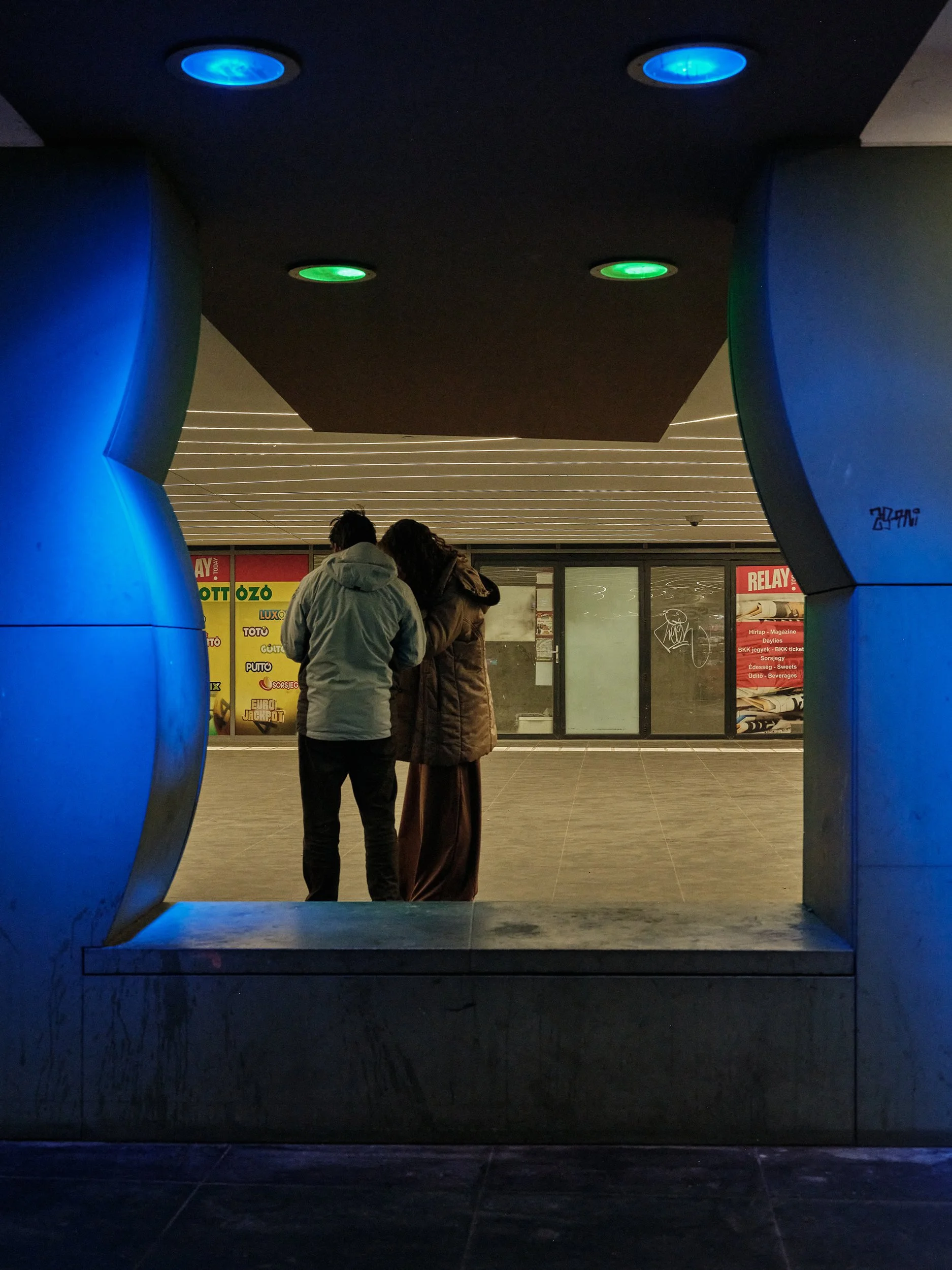
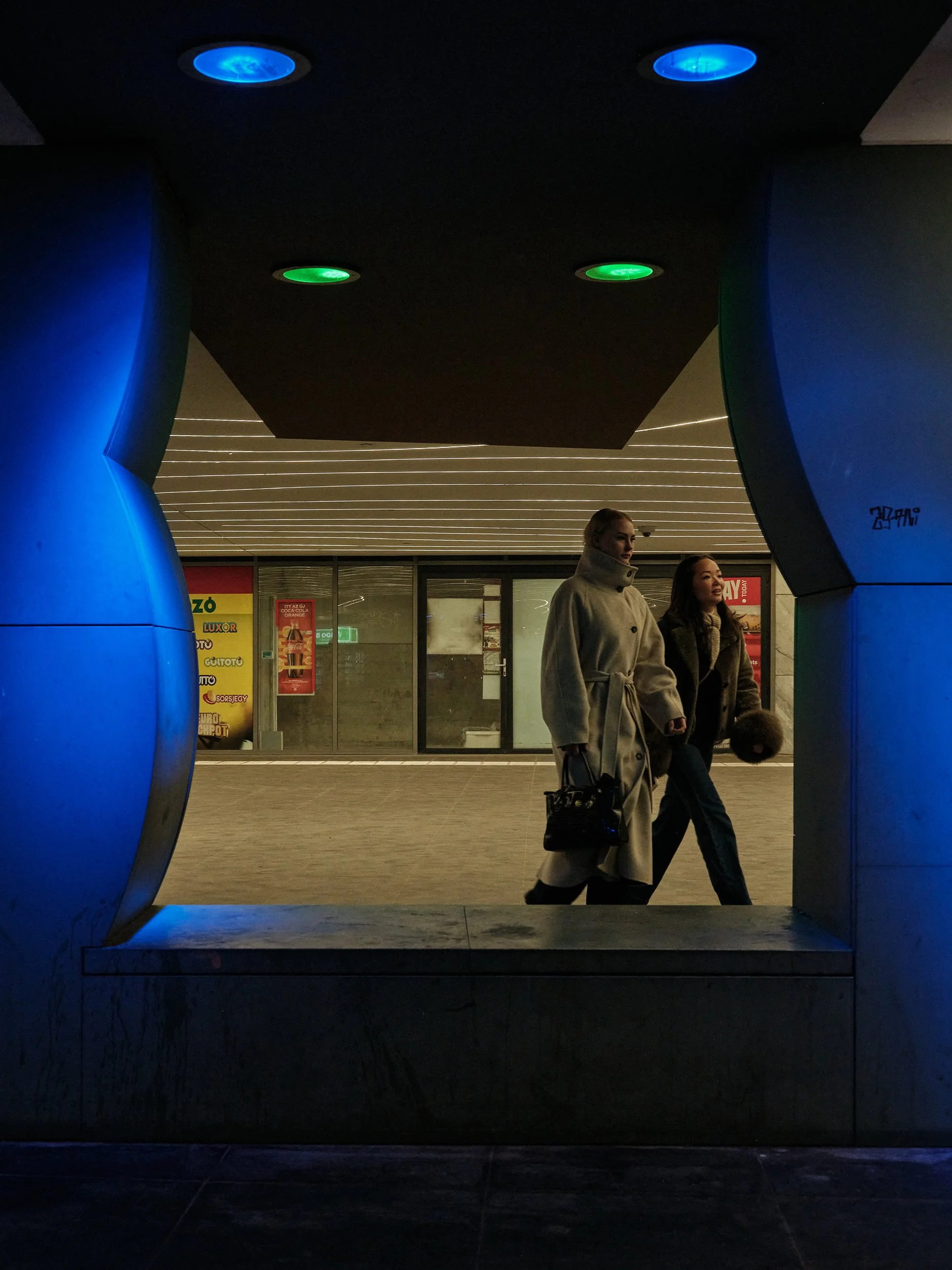
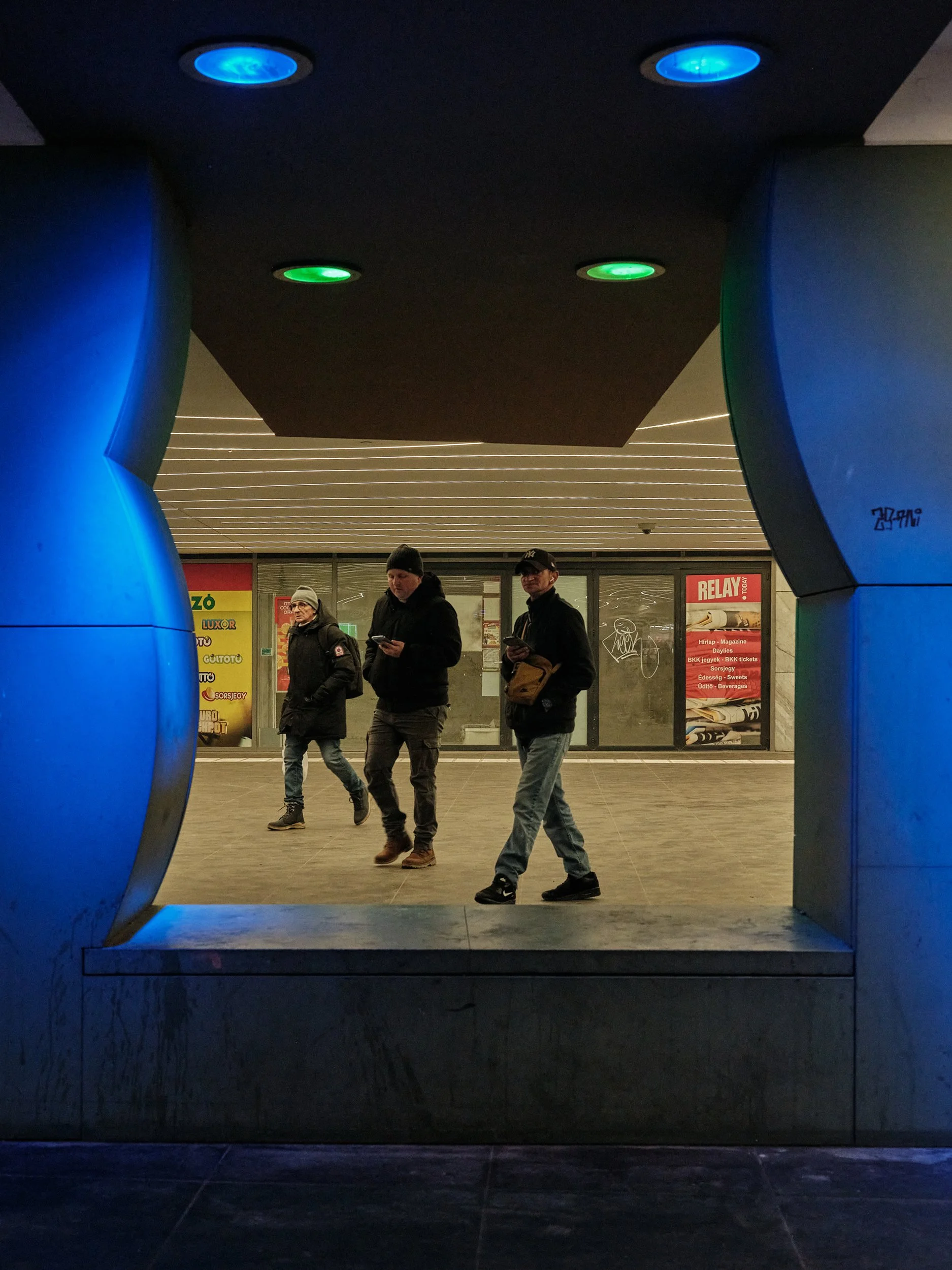
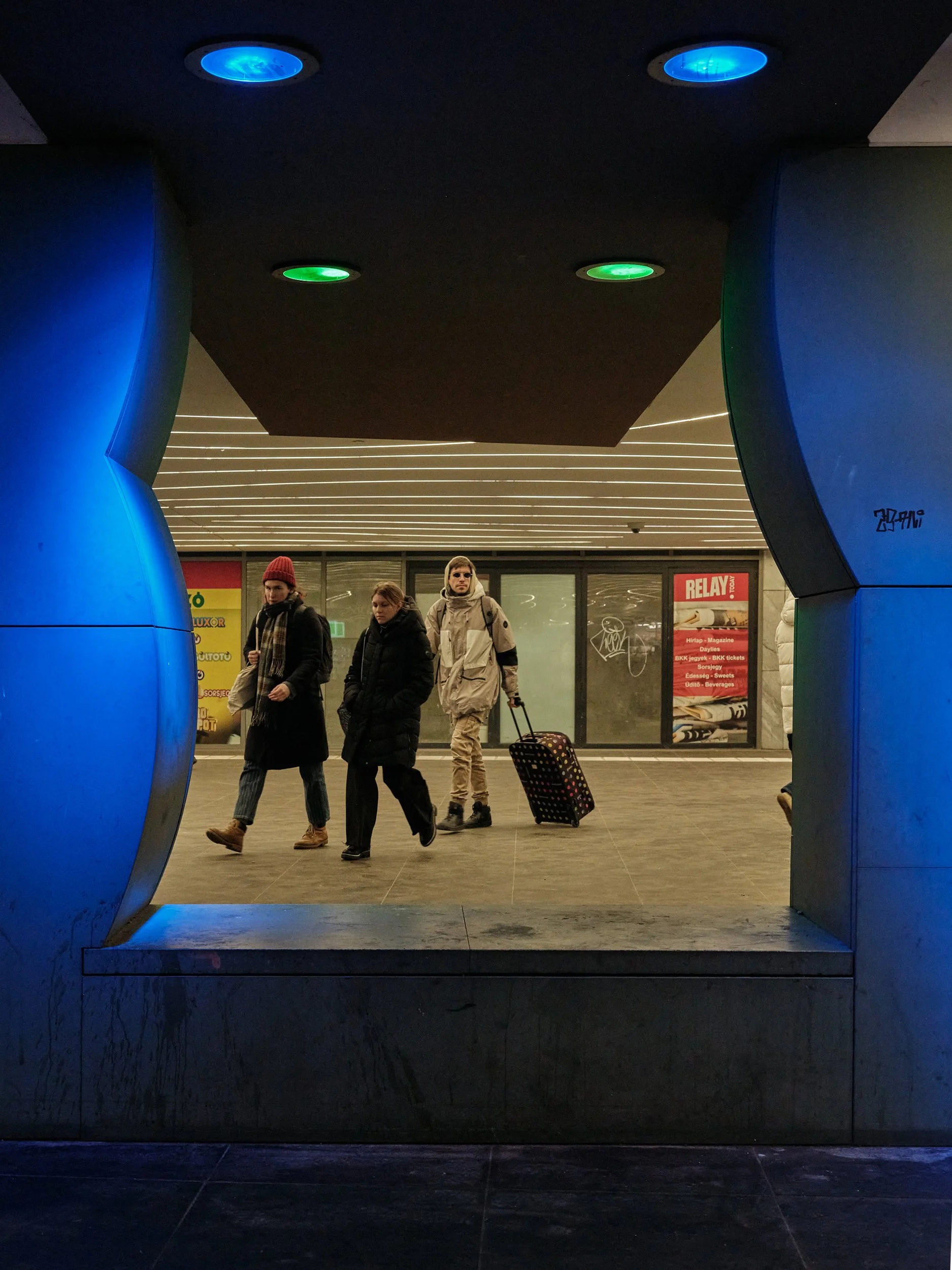
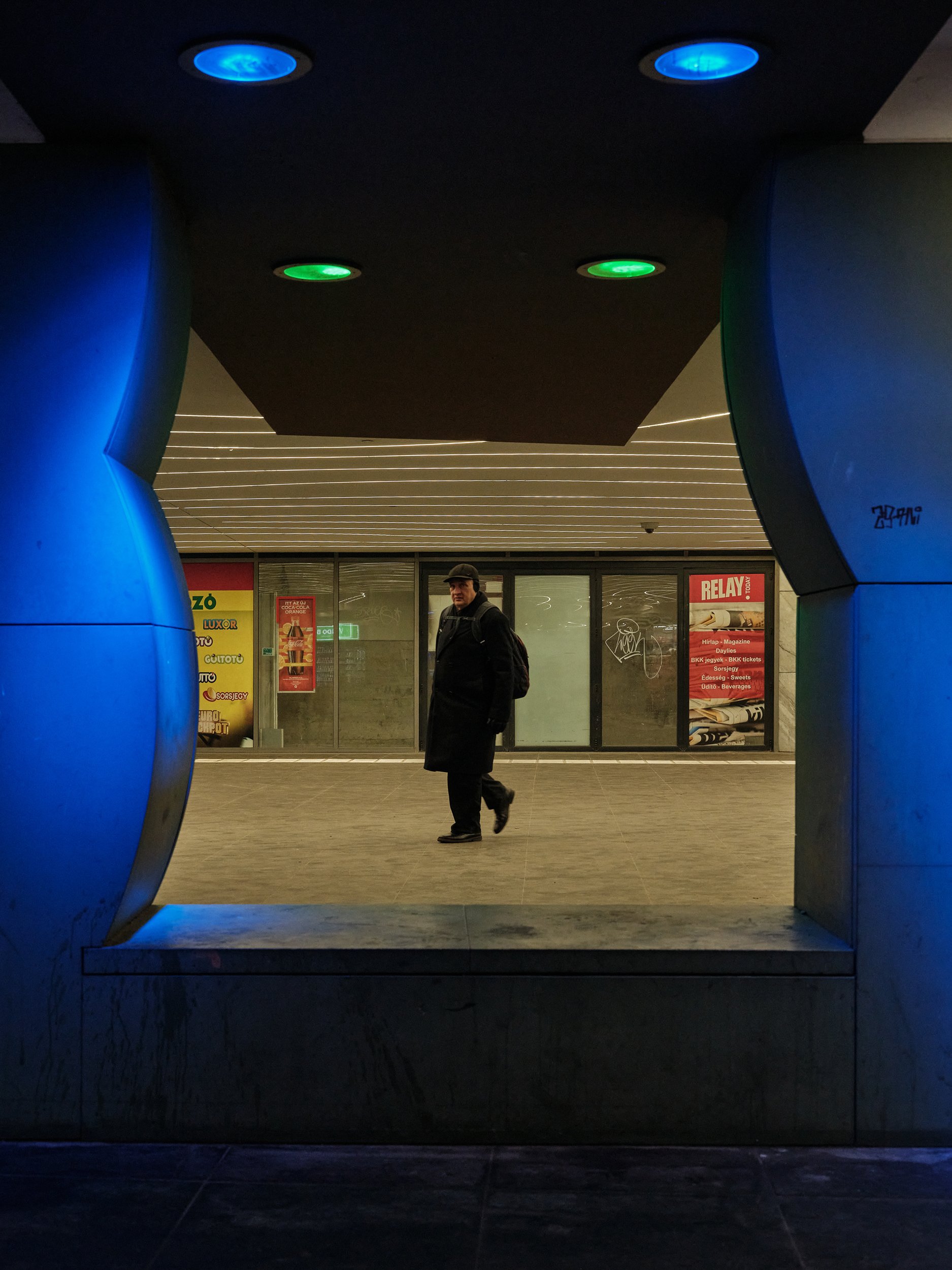
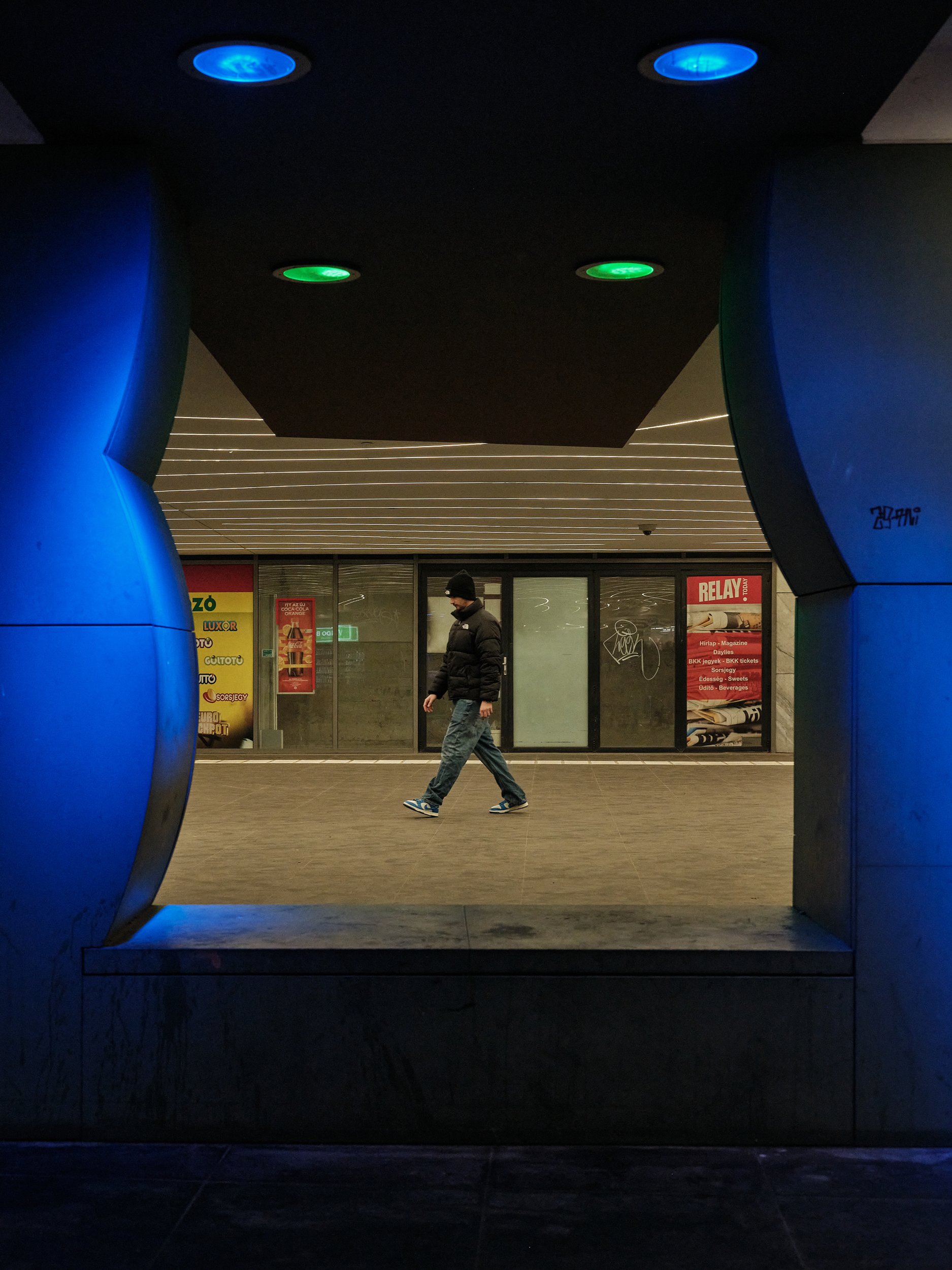
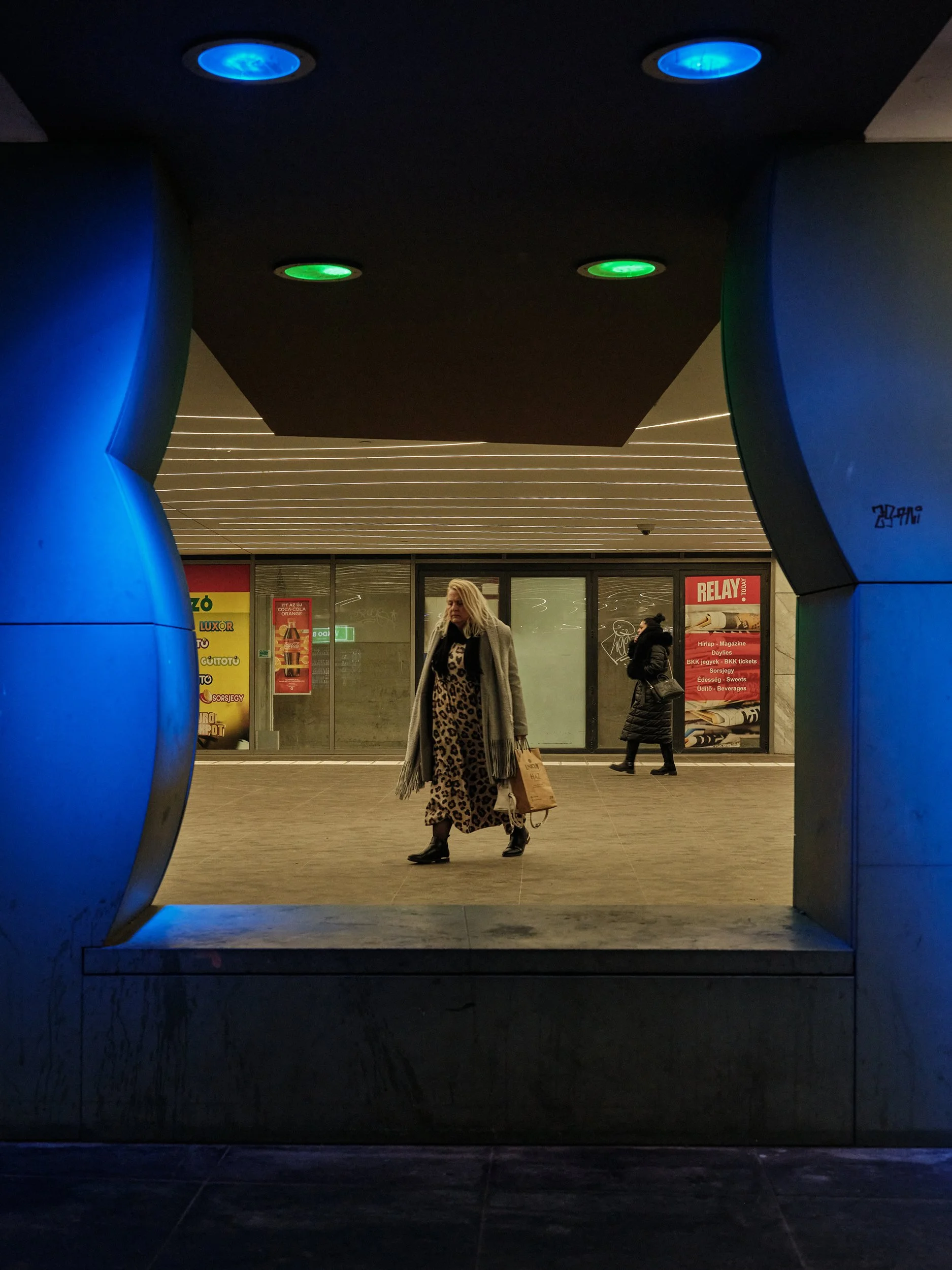
I walked from one end of the passage to the other, drawn forward by that shape—by the way it carved the world into a clean rectangle. Above it, circular lights glowed like quiet signals: blue, green, blue. The tunnel didn’t just guide people through; it edited them. It turned foot traffic into a series of scenes.
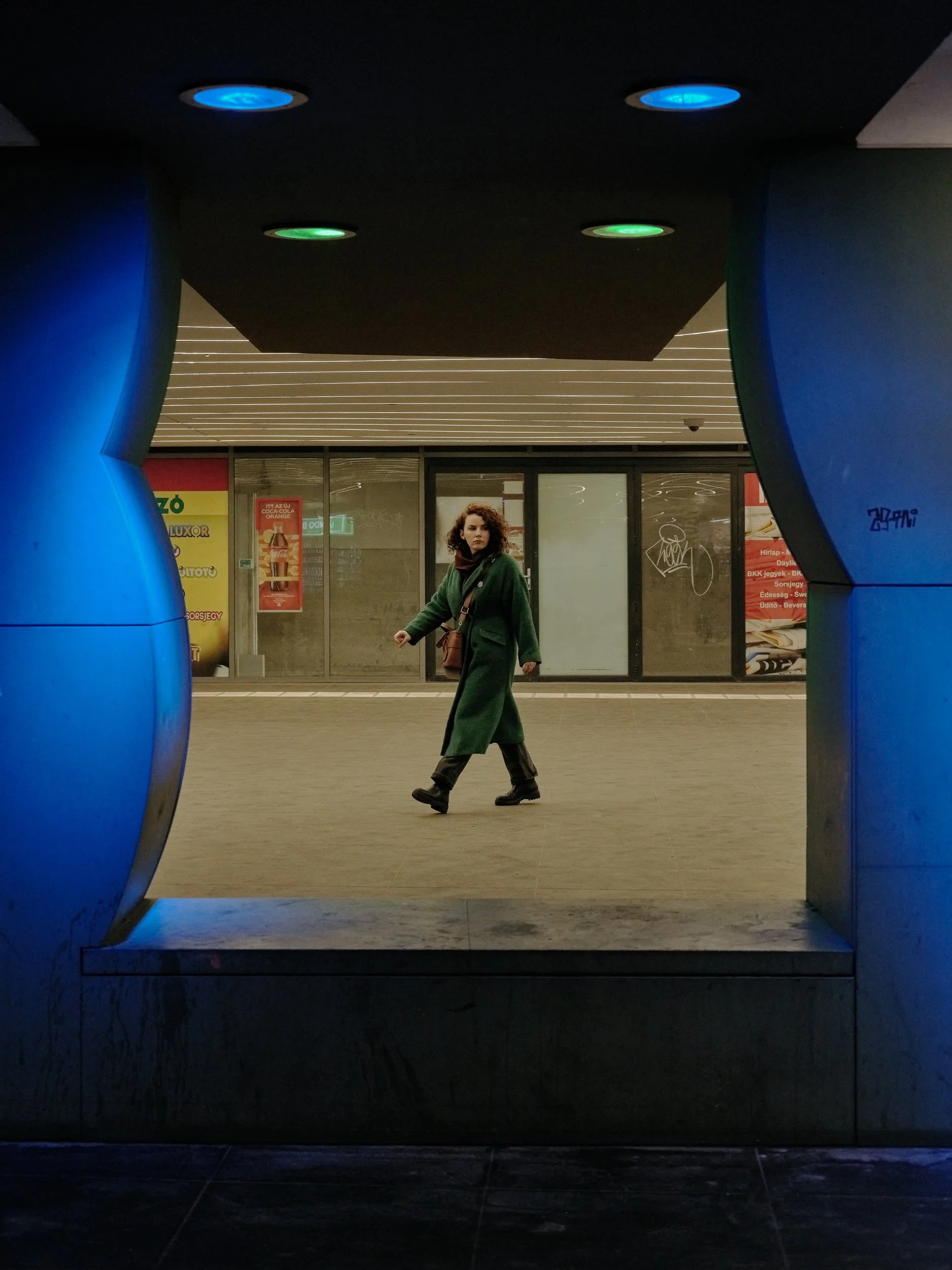
I was short on time, so I did what street photographers do when the moment taps you on the shoulder: I stopped, I steadied, I waited just long enough for the frame to fill with life.
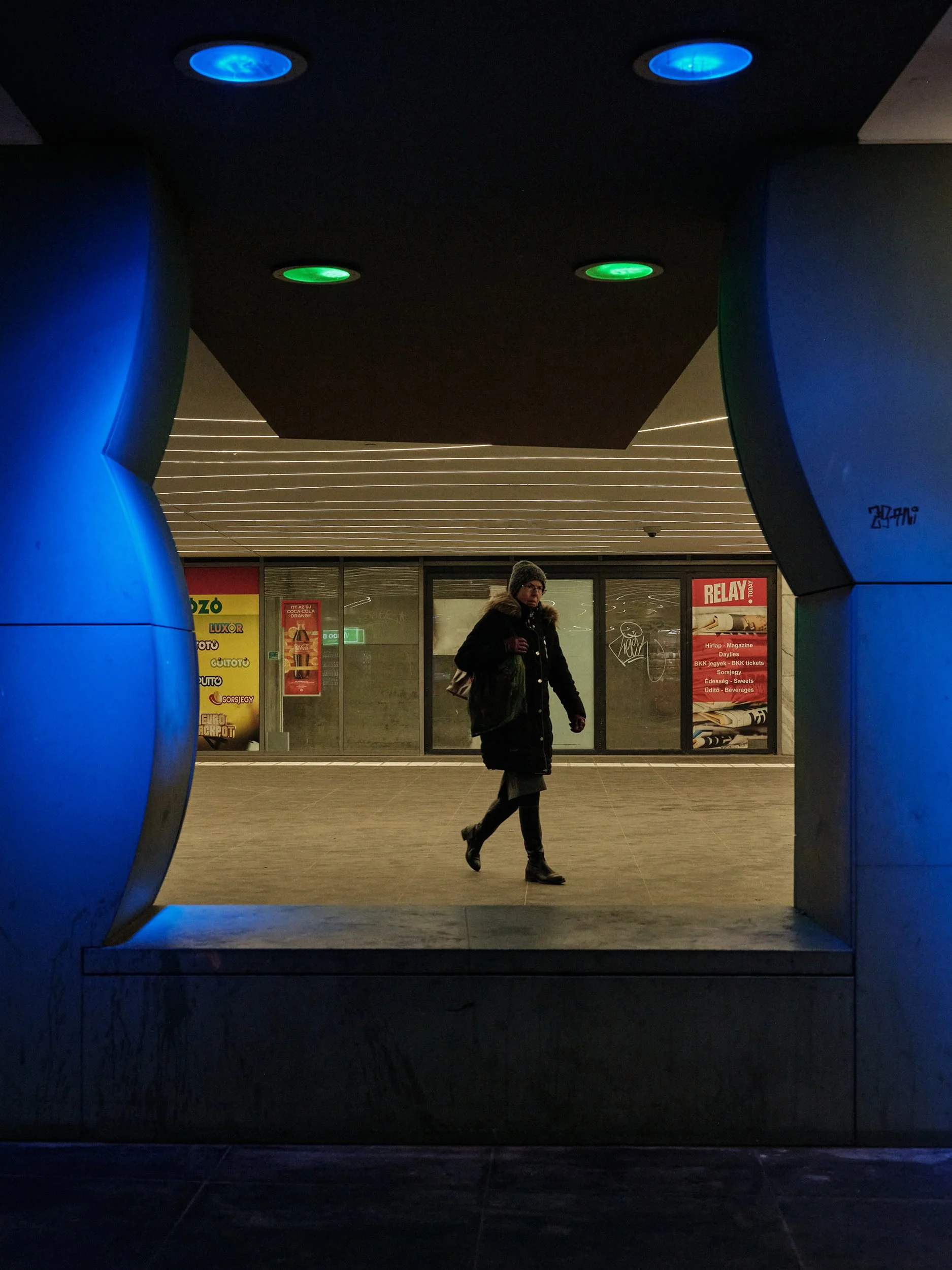
A lone woman moved through the opening—bundled for the cold, scarf wrapped tight, stride purposeful. In one second, she was a stranger on a commute. In the next, she was a character in a film I’d never seen before: crossing the stage, holding a private destination in her posture. I clicked once. Just one frame. Then the city carried me onward.
Later that evening, back in the warmth, I reviewed the day’s photographs—routine at first, until I found that single shot from underground.
And I fell in love.
Not because it was perfect in a technical way—though it had a kind of quiet precision. Not because it was dramatic. Because it was simple. A human figure, moving with intent, held inside a sculpted blue border like a memory you can’t quite place. I didn’t know where she was going. I didn’t know what she was carrying inside her thoughts. And that was the point.
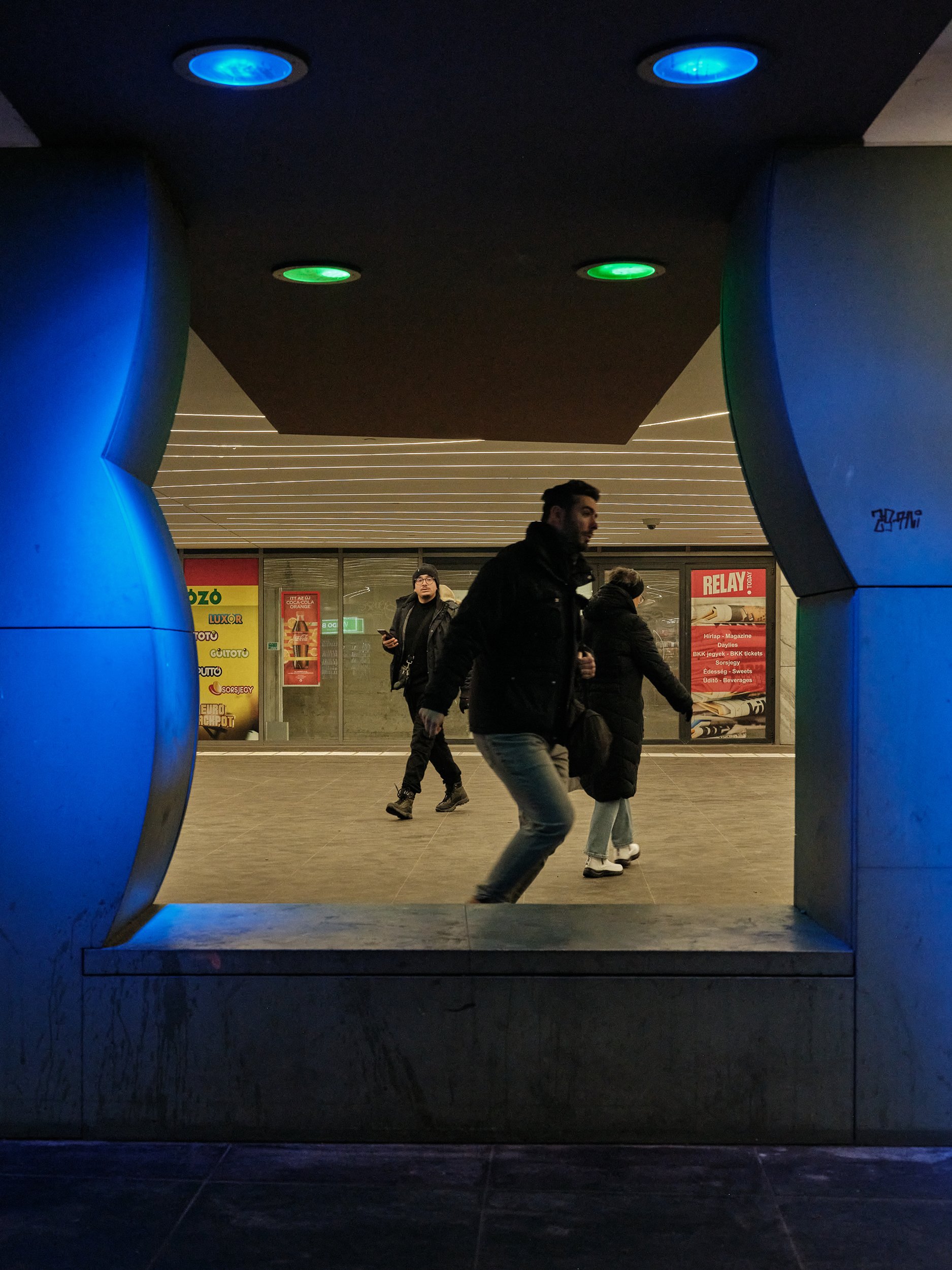
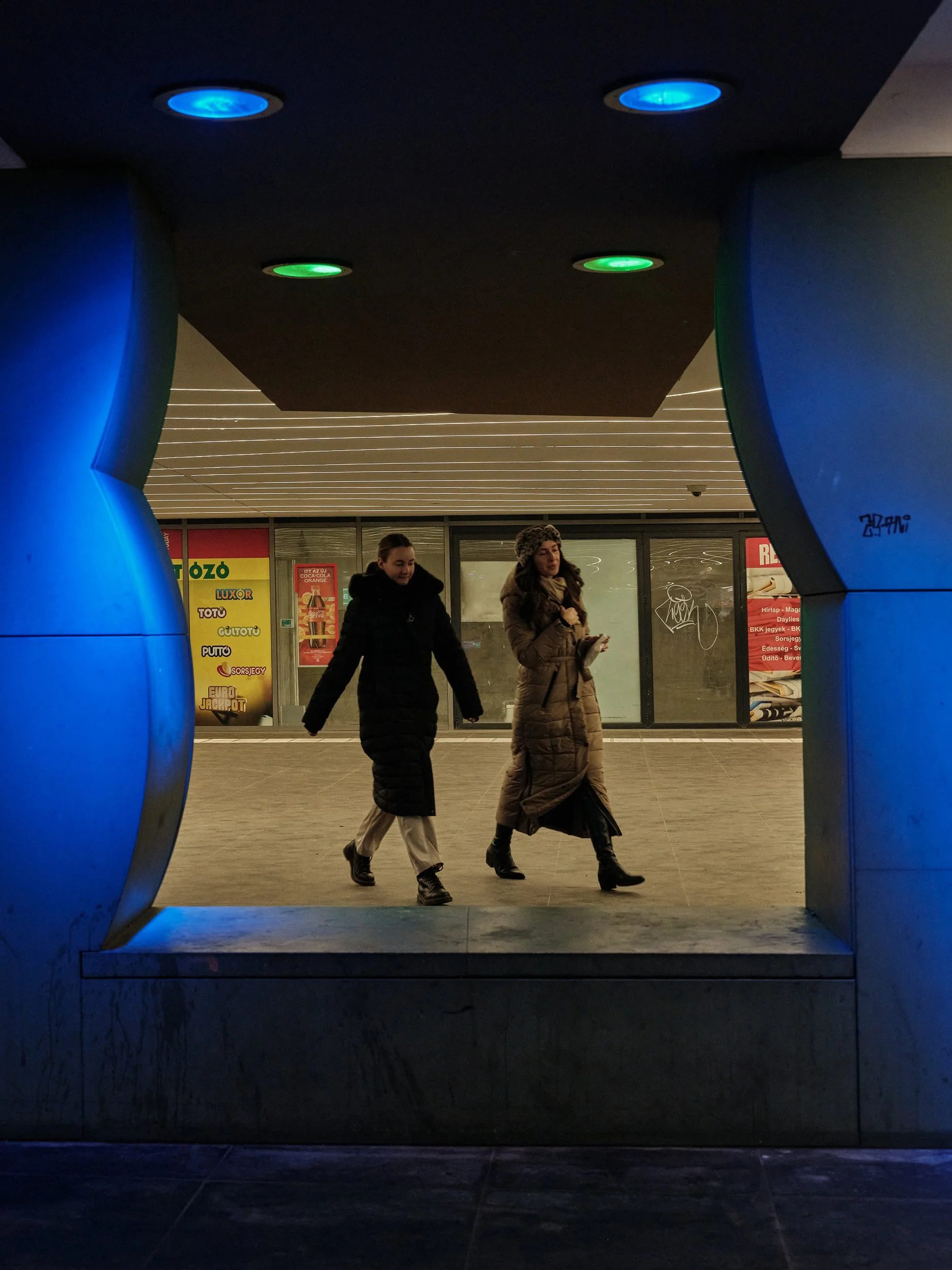
Street photography doesn’t hand you the whole story. It gives you a doorway and asks you to feel what’s on the other side.
The forecast called for more snow and more clouds—more of that soft light that makes colors deepen and shadows behave. I decided I had to go back. I wanted to spend time in that underground wonderland, to see what it would offer when I wasn’t rushing through. But first I had to do something strangely difficult: I had to find it again.
Budapest has a way of folding in on itself. Streets curve, passages disappear, stairwells lead to other stairwells. The city isn’t lost—it just doesn’t mind if you are.
So I wandered. I retraced my steps, then doubted them. I explored subterranean corridors that felt like they belonged to other days, other lives—each one echoing, each one carrying the sound of someone else in a hurry. I walked with my camera tucked close, scanning for that navy-blue shape, that specific cut of geometry, that feeling of a window set into the flow of people.
After an hour of hunting, I found it.
The same frame. The same lights glowing above like calm eyes. The same rectangular opening, waiting—patient as a stage before the actors arrive.
I set up where the tunnel could do its work. I wasn’t chasing faces. I wasn’t trying to force meaning. I was watching for alignment: the moment when a person’s stride, the tunnel’s symmetry, and the city’s tempo all agreed to become one image.
And then they came.
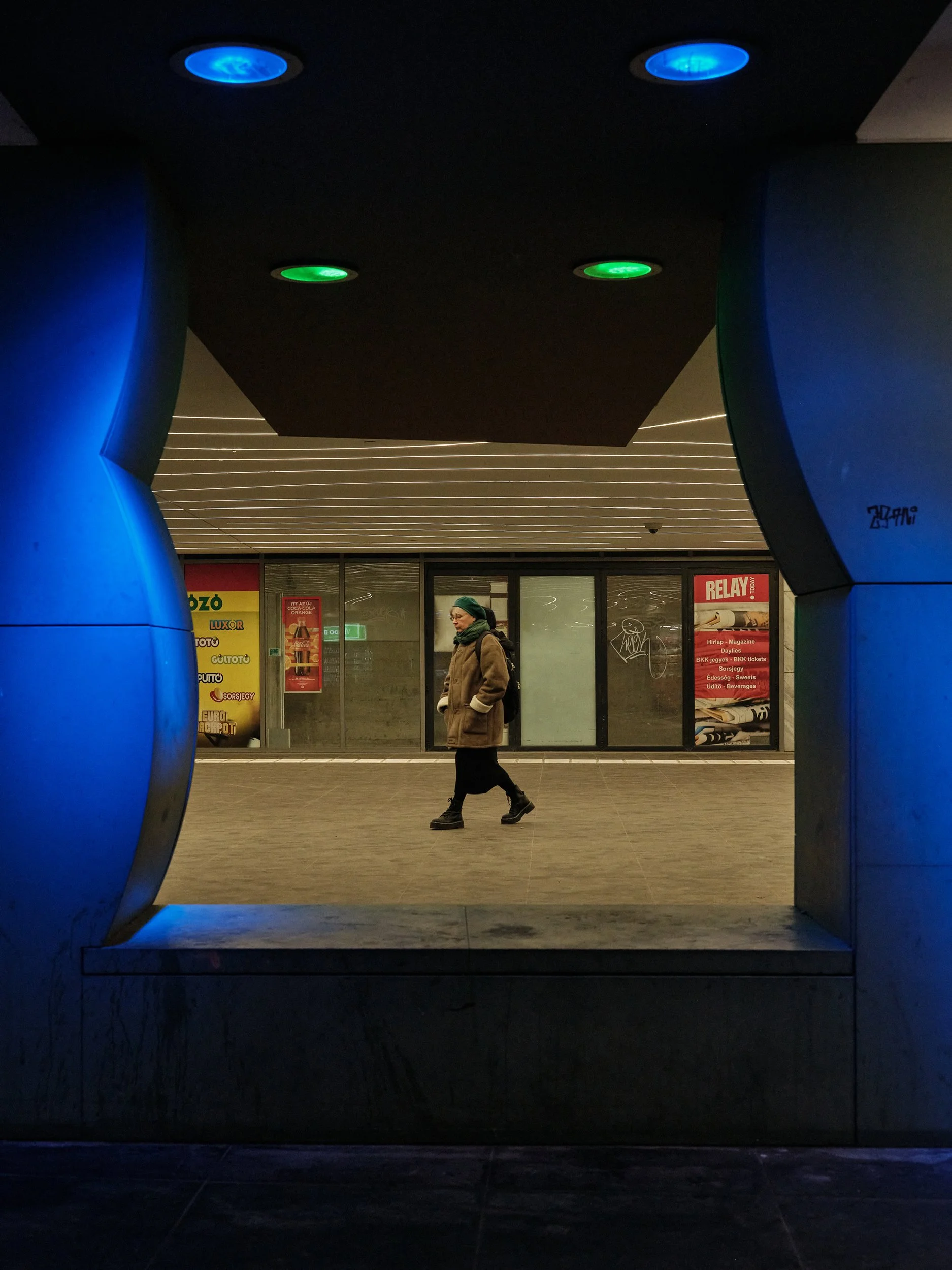
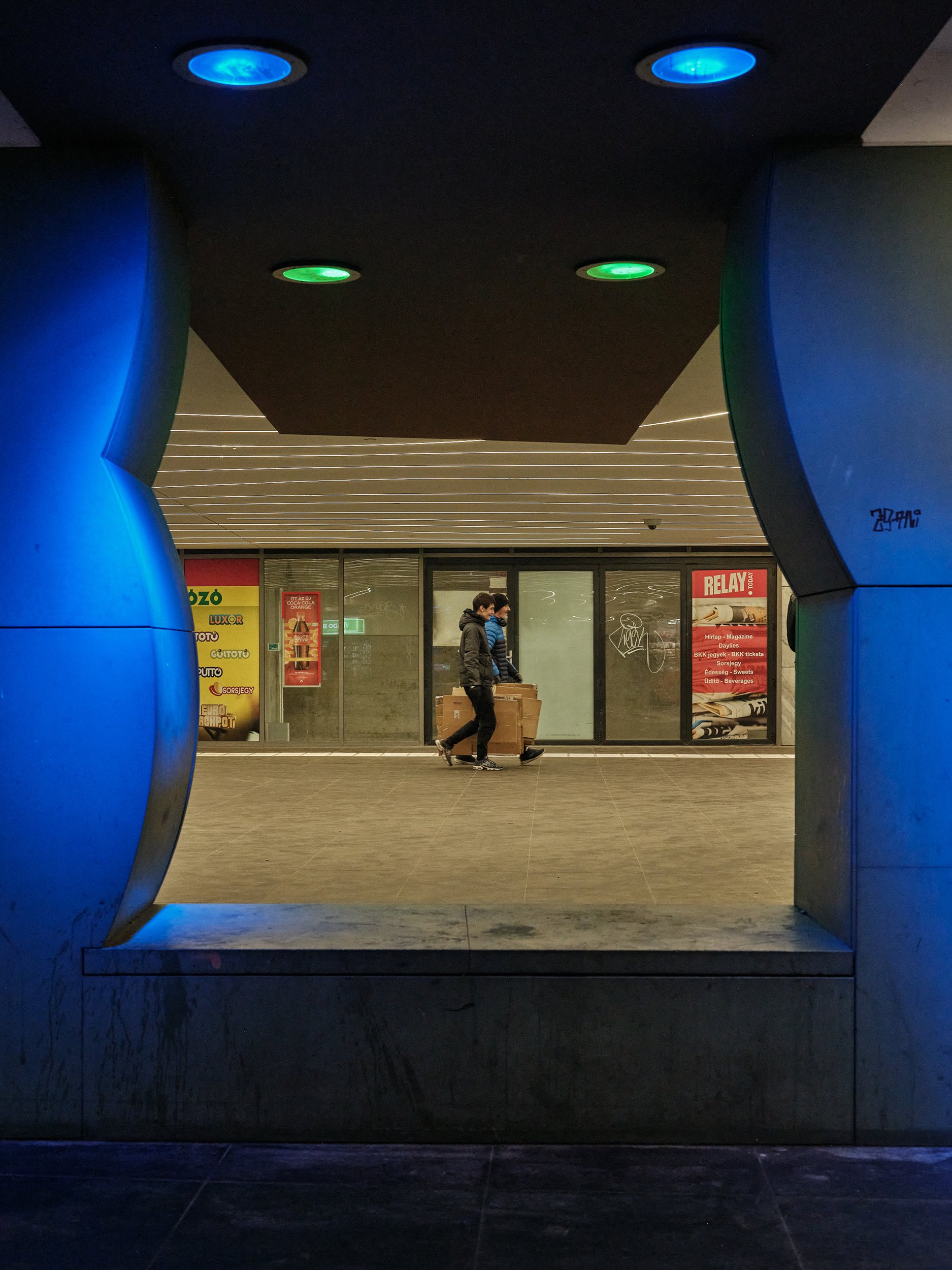
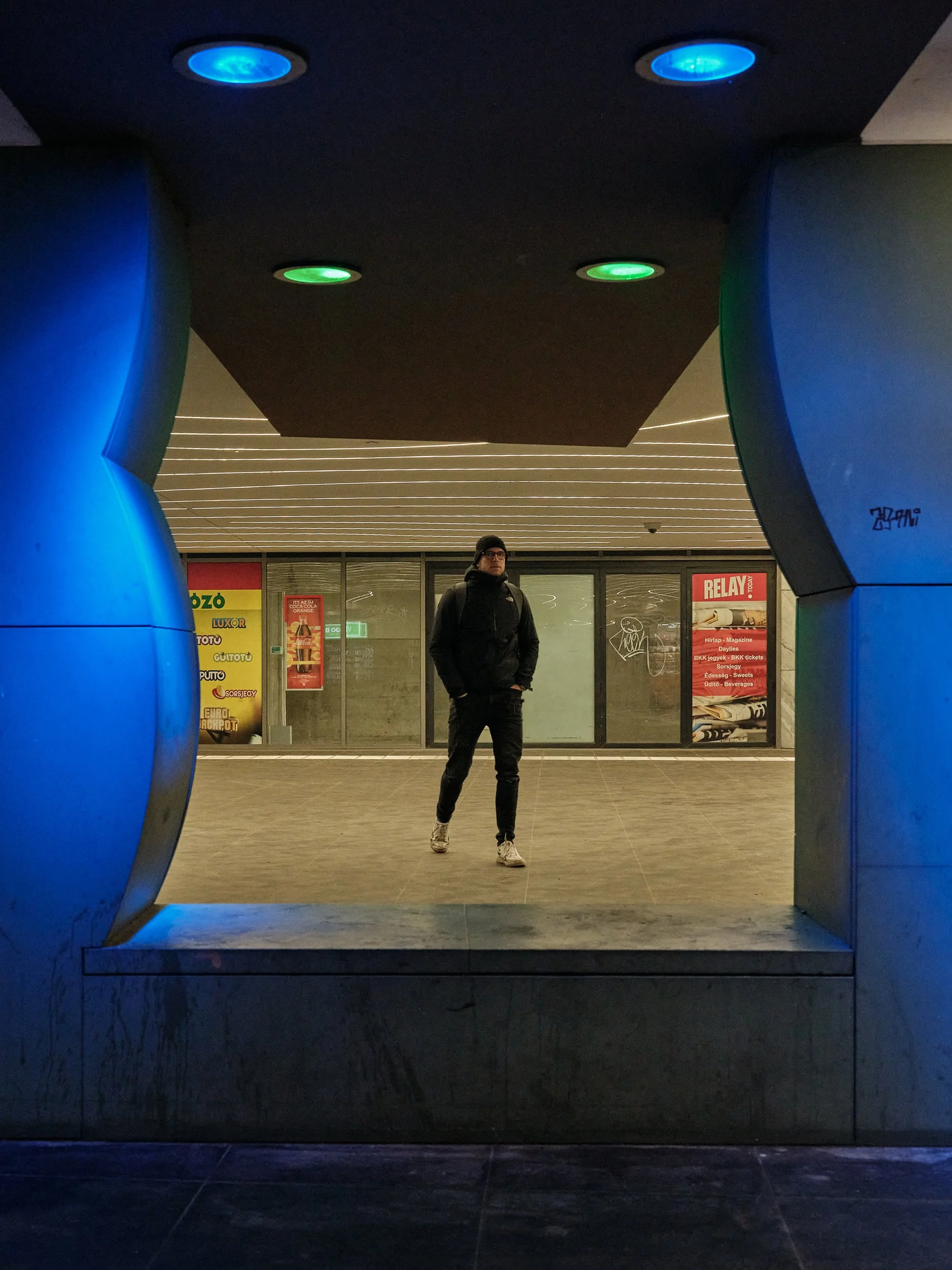
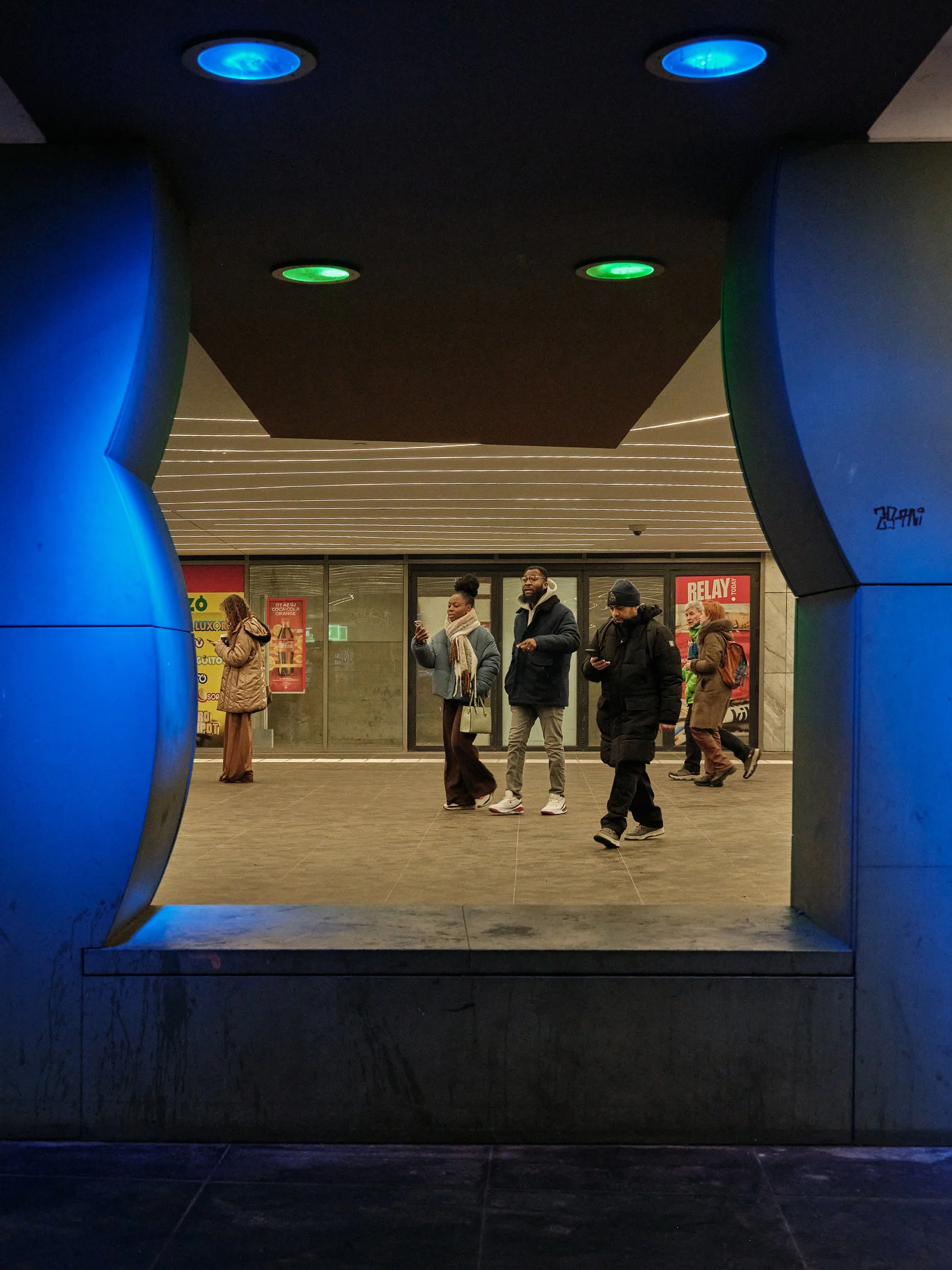
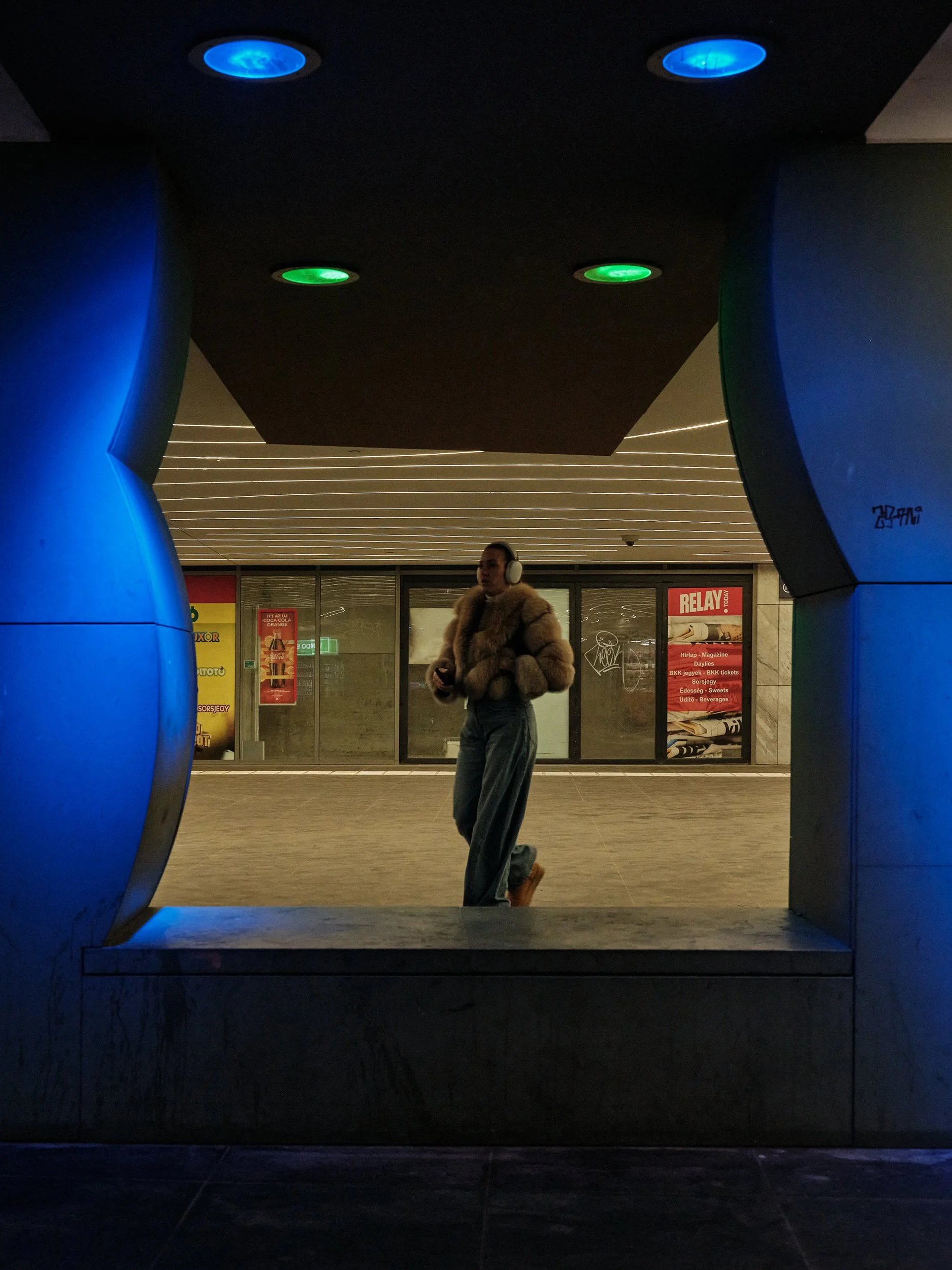
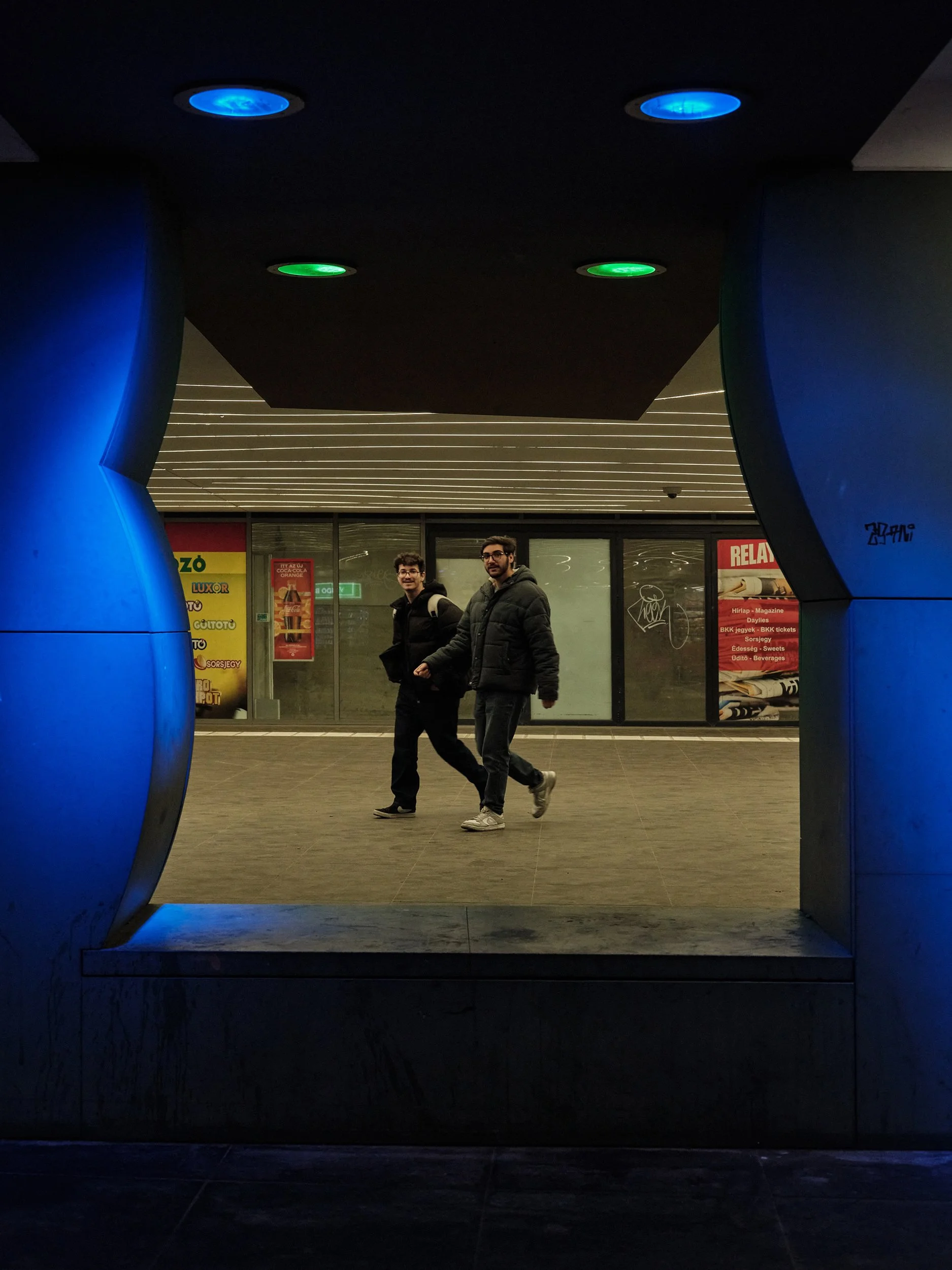
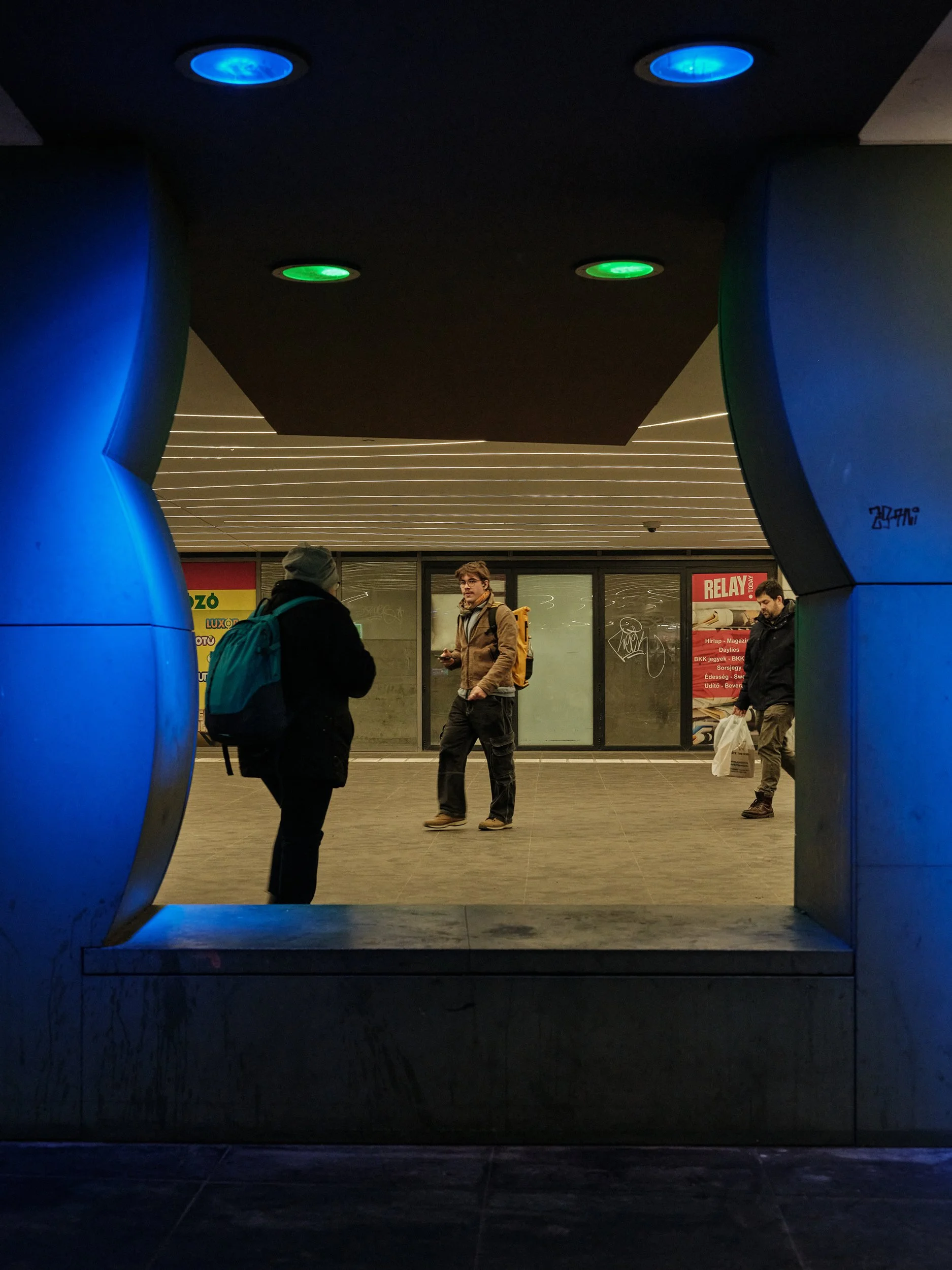
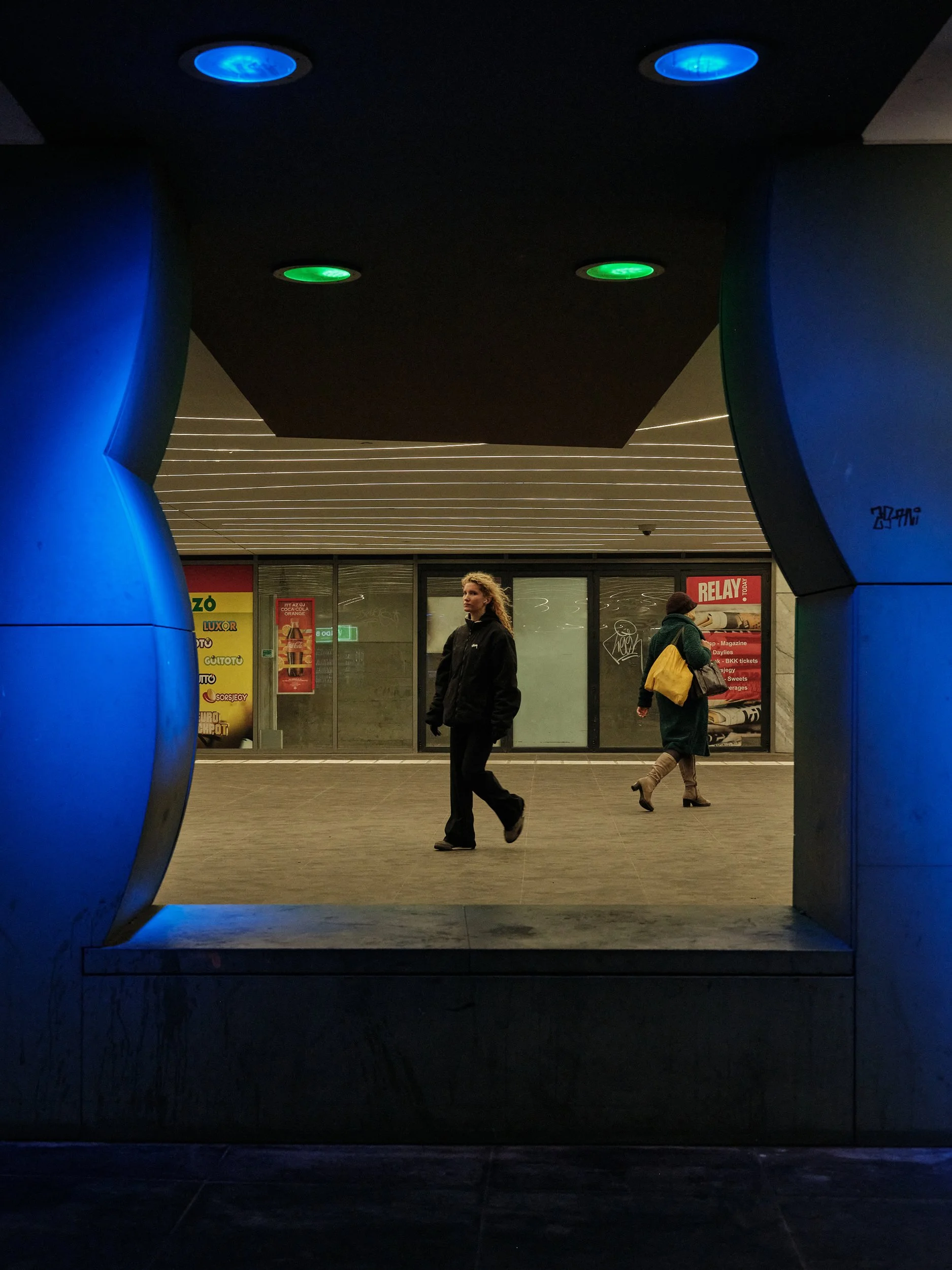
Locals and tourists alike, all moving through space and time with purpose—even if that purpose was only “get through here.” Some looked like they were headed to work, shoulders squared against the weather. Others drifted, scanning signs, lost in that gentle panic of realizing you’ve taken the wrong turn. Some walked in pairs, talking, laughing, leaning toward each other as if the cold couldn’t reach them when they shared a conversation. Others moved alone, guarded and quiet, with eyes forward and hands buried deep—winter making everyone a little more private.
Each passerby became a brief story—edited by the blue frame, lit by the overhead glow, and then released back into the city.
I shot for an hour, letting the tunnel choose its cast.
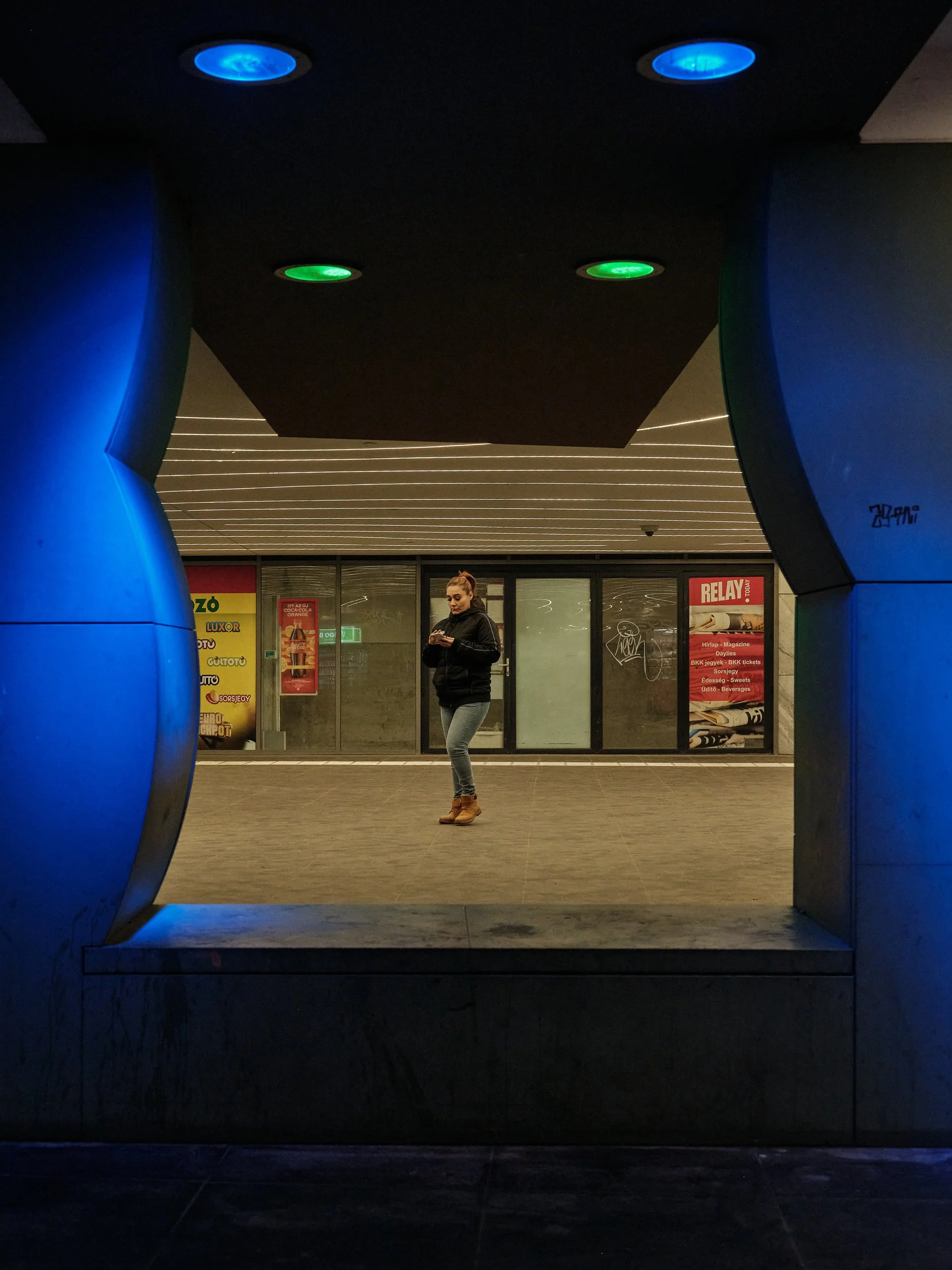
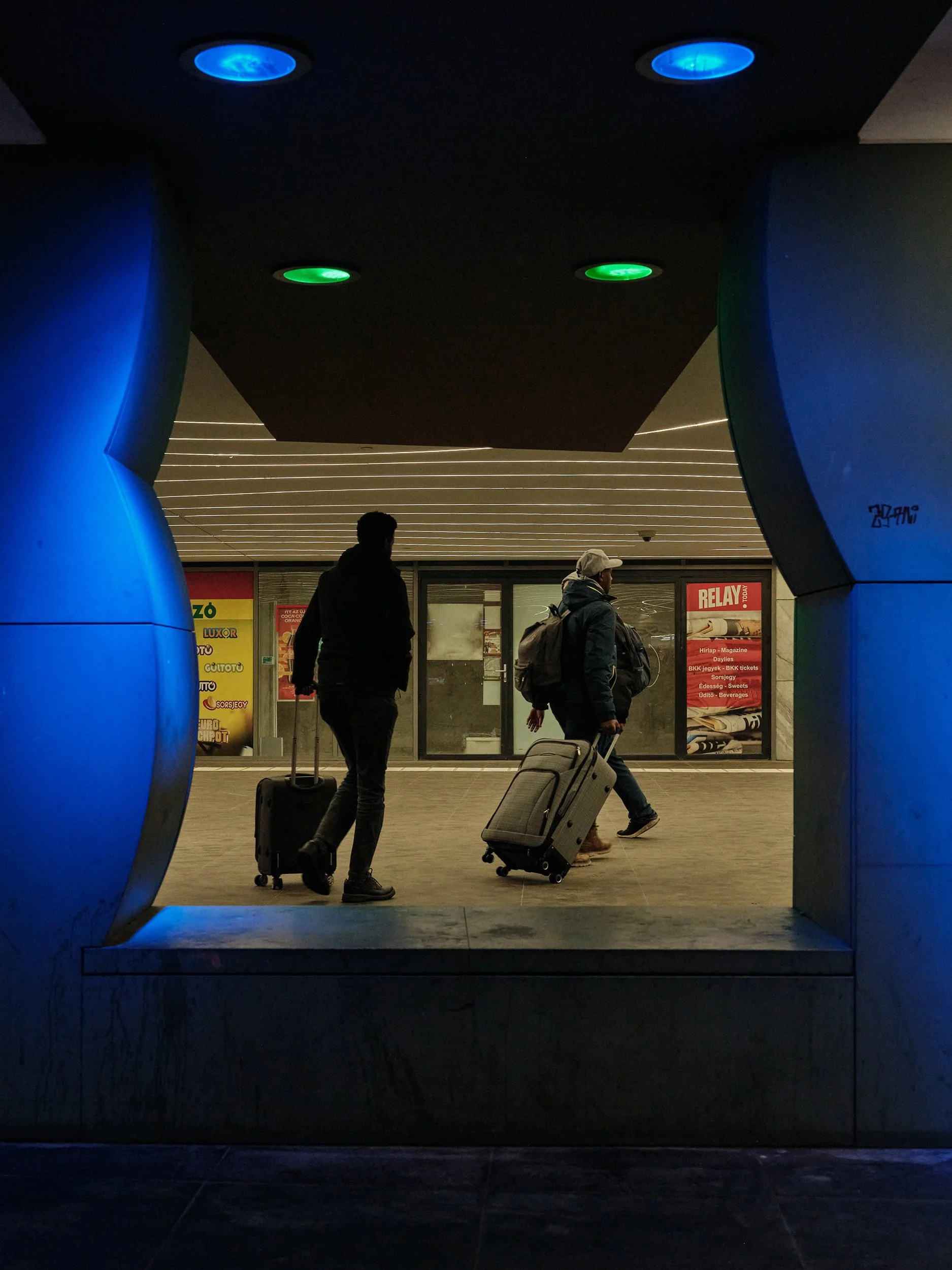
A man in a dark coat crossed like a silhouette, heavy with thought. A traveler rolled a suitcase behind them, the wheels making a soft rhythm across the floor—arrival and departure in the same sound. A pair of friends passed mid-sentence, their breath almost visible in the cold air that still lived in their clothes. Someone checked their phone while walking, half here, half elsewhere—modern life split into two worlds, both demanding attention.
And every time someone entered that window, I felt the same thing: the small shock of realizing how many lives move around us, untouched by our knowing.
That’s what Karolyi Tunnel gave me. A simple, sculpted reminder.
We are all headed somewhere. We are all carrying something. We move with intent even when we don’t call it that. And for a fraction of a second—inside a navy-blue frame underground—our paths can be held still long enough to see the beauty in passing.
When I finally stepped away, the tunnel kept going without me. The lights stayed blue and green. The city kept walking.
And the window remained—waiting for the next stranger to become a scene.
- Just Gonz